
PV-T Explained: Getting Electricity and Hot Water From One Panel
A conventional solar PV panel converts around 20% of the sunlight that reaches it into electricity. The rest is lost as heat, enough to noticeably warm the panel itself, which in turn makes it less efficient at generating electricity as it heats up.
PV-T (photovoltaic-thermal) hybrid panels capture that otherwise-wasted heat through a fluid circuit running behind the solar cells, delivering it for use in hot water or space heating, while simultaneously cooling the cells to keep their electrical output higher than an equivalent standard panel in full sun.
Why it matters for buildings with both electrical and thermal demand
Any site with meaningful year-round hot water or heating demand alongside its electricity use is a strong candidate: leisure centres and swimming pools, care homes, hotels, food production facilities, and process industries. If a building currently pays separately to heat water and to power itself, PV-T addresses both from a single roof installation.
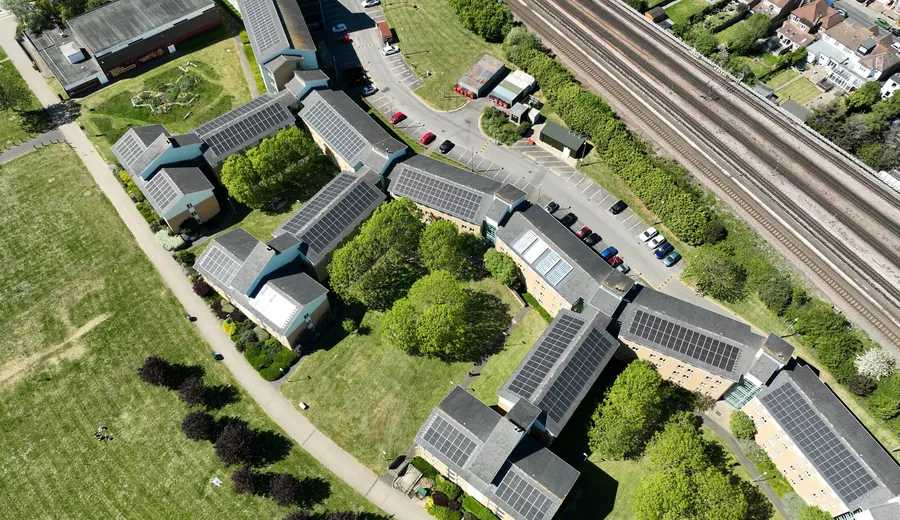
Our own PV-T project for the University of Westminster is a good illustration of the principle at scale: a phased rooftop programme across student accommodation combining PV-T hybrid, solar thermal and standard solar PV, replacing the site’s heating and hot water infrastructure while offsetting a significant share of its electrical demand.
Where PV-T outperforms PV plus a separate heat pump
Per square metre of roof, PV-T can achieve combined efficiencies of 60-80%, against roughly 20% for standard PV alone. Where roof space is the binding constraint, that makes it the highest-yield technology available. Where roof space is generous, a standard PV array paired with a separately-sized heat pump can still be the better answer. We model both approaches and recommend whichever gives the better return, rather than defaulting to our specialist technology by default.
What to check before specifying PV-T
- Genuine year-round thermal demand, not just a seasonal spike
- Compatible heat distribution (PV-T pairs particularly well with heat pumps and underfloor heating, since the warmed fluid can lift the heat pump’s coefficient of performance)
- A design and installation partner with both mechanical and electrical expertise: PV-T sits across both disciplines, and few UK installers hold both
Read more on our PV-T hybrid solar page, or get in touch to discuss whether it fits your site.
Ready to explore renewable energy for your project?
Talk to our technical team about your site, your energy goals and what's possible.